
Execute and Endure: Turning Strategy into Culture
At kilometre 35 of a marathon, the plan often no longer matters. The body is tired, the mind is bargaining and the finish line feels distant. What carries you through isn’t the schedule or the spreadsheet — it’s attitude. In the workplace, we’d call it culture.
Execution is where vision meets reality, and endurance decides who finishes.
The Rhythm of Execution
Peter Drucker famously said, “Culture eats strategy for breakfast.” But I’d add: culture also determines how strategy digests reality.
The best plans collapse under inconsistency. In endurance running, that looks like erratic training or ignoring recovery. In organisations, it’s initiative fatigue and shifting priorities. The common denominator is rhythm — or the lack of it.
Execution thrives on rhythm: a cadence of doing, reflecting, and adjusting. That’s the execute and endure phase of the strategic endurance mindset — consistency through change.
Building Endurance Systems
When I was juggling training with work, travel and family, sustainability became my constraint. I couldn’t rely on inspiration; I needed systems that carried me when motivation wavered.
So I built rituals — similar kit, pre-determined nutrition, same pre-run routine. It wasn’t superstition; it was automation.
Leaders can do the same. Embed daily check-ins, weekly retrospectives, quarterly reviews — feedback loops that create cultural consistency. These are the “recovery runs” of leadership: small, sustainable actions that maintain pace and prevent burnout.
Resilient teams treat execution as a cycle, not a sprint.
Culture as the Engine Room
Frynas & Mellahi call this ‘strategy implementation’: it’s about strategy in action, where organising, enabling, and performance evaluation converge.
In practice, that means embedding behaviours that reflect intent. If your strategy values innovation, reward experimentation. If it values precision, celebrate diligence. Strategy becomes culture only when it’s lived, not laminated.
This is why resilience belongs in the conversation. As in endurance sport, setbacks aren’t interruptions — they’re part of the rhythm. The question isn’t whether obstacles occur, but whether the culture absorbs and adapts to them.
Leading Through Fatigue
At some point, every leader — like every runner — hits the wall. The body says stop; the plan says continue. That’s when leadership becomes less about inspiration and more about steadiness.
Stoicism offers timeless guidance: focus on what you can control, accept what you can’t, and act with purpose. In those moments, leaders model composure; they turn endurance into an organisational virtue.
Coaching can be transformative here — not as performance management, but as structured reflection. The coach holds the mirror, helping leaders pace themselves, recover wisely, and stay aligned with purpose.
It is not in our control to have everything turn out exactly as we want, but it is in our control to control how we respond to what happens – Epictetus
Closing Reflection
Execution is rarely glamorous. It’s the long road between intention and impact.
But it’s also where culture is forged and lived — in the daily discipline of teams who keep showing up, even when the finish line moves.
In endurance sport, the reward isn’t the medal. It’s the knowledge that you built something inside yourself that lasts.
For leaders, it’s the same: to execute and endure is to build a culture that can thrive beyond your own stride.

Design and Decide: Balancing Creativity and Commitment
Strategy, like running, is the art of deliberate design — not random effort.
When I first committed to running 12 marathons in 12 months, I quickly realised that enthusiasm was not a plan. I needed to design a system that balanced ambition with recovery, structure with flexibility, and creativity with discipline.
The same holds true for leadership. Big visions and bold goals mean little without design and decision — the twin engines that translate aspiration into action.
The Creative Discipline
Design thinking begins where most plans fail: at the messy intersection of imagination and reality.
In training, this meant experimentation. I tested gear, nutrition, recovery strategies. I planned runs based on climate, travel and work; spacing them so that I could adapt rather than collapse. Every month became a prototype — a test, not a verdict.
This iterative approach mirrors the Frame–Design–Execute rhythm that can be used in the workplace. Frynas & Mellahi describe it as moving from “strategic analysis” to “strategic choice” — balancing creativity with feasibility.
Creativity without constraint leads to chaos. Constraint without creativity leads to stagnation. The design phase is where leaders balance both.
Deciding with Clarity
But design is only half the equation.
Porter reminds us that strategy is fundamentally about choice — deciding what not to do. The decision to exclude is what gives focus its power.
In my marathon year, I declined several tempting runs. Some clashed with recovery cycles; others risked overtraining. The hardest decision was not what to add but what to eliminate.
That discipline applies to leadership: saying no to initiatives that distract, even if they’re appealing. Drucker called it ‘concentration’: the single secret of effectiveness. Strategy, at its heart, is the courage to commit.
If there is one ‘secret’ of effectiveness, it is concentration. Effective executives do first things first and they do one thing at a time - Peter F. Drucker
The Decision Trap
Modern leaders face an abundance of data, options and noise. It’s easy to confuse analysis with clarity. This is the ‘decision trap’: the illusion that more information equals better judgement.
In reality, decisive leaders blend logic with intuition. They experiment early, learn fast and adjust — not because they’re reckless, but because they’ve built feedback into their design.
Cal Newport’s Deep Work reminds us that quality decisions require undisturbed focus. Without deliberate thinking time, leaders make shallow choices that feel safe but lack depth.
Clarity about what matters provides clarity about what does not – Cal Newport
From Design to Discipline
Once you’ve designed the system and decided the course, discipline takes over. The bridge between vision and execution is repetition — what Aristotle called habit, and what modern neuroscience calls myelination: the strengthening of neural pathways through consistent action.
That’s why ‘design’ and ‘decide’ belong together. Without design, decisions lack context. Without decision, designs remain abstract. Together, they create strategic integrity — the alignment between idea and action.
Closing Reflection
Great leaders are architects of momentum. They design systems that foster creativity, then decide with conviction when it’s time to commit.
In both running and leadership, design creates possibility; decision creates progress.
And once the decision is made, the only thing left to do — is move.
Frame and Reframe: The Leadership Skill of Rethinking
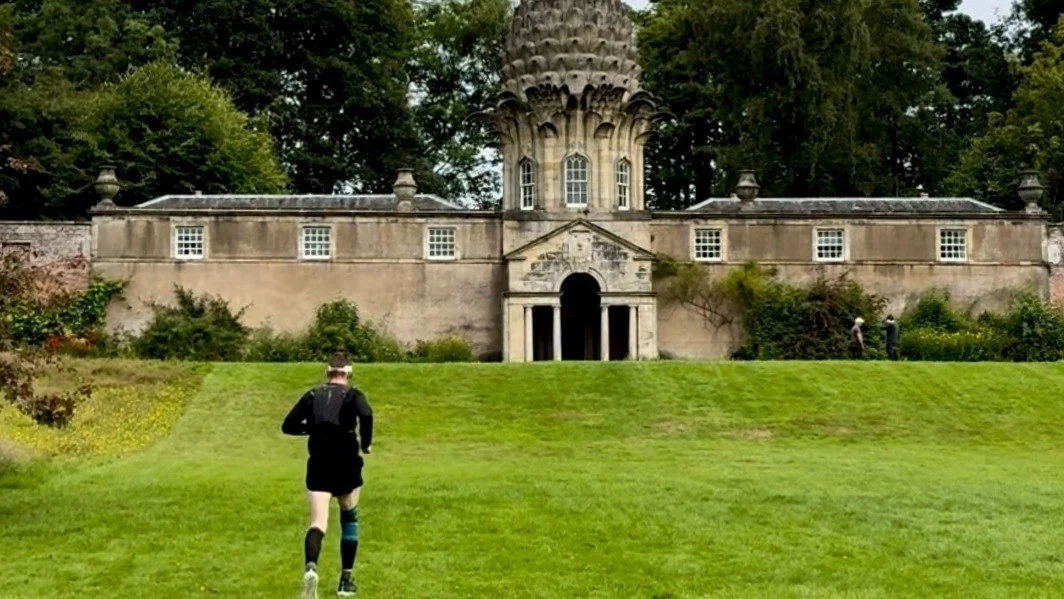
Every marathon starts long before the start line — in how you frame the challenge ahead.
If your framing is wrong, no amount of effort will make the outcome right. Misjudge the terrain, ignore the weather, overestimate your fitness — and you pay for it in the final kilometres. The same principle applies to leadership: the way we define a problem determines the quality of our decisions, and ultimately, our results.
The Stoics knew this. So did Drucker, Porter, and every strategist worth studying. The greatest leverage point in any endeavour lies in how you see the situation, not just how you act within it.
The Power of Framing
In marathon training, I learned that success depends on perspective. Some days the goal was distance; other days it was recovery. When an injury set me back, the goal shifted from running fast to running smart. Each time I reframed what “progress” meant, I was able to keep moving forward.
This mirrors Drucker’s idea that effectiveness is doing the right things, not merely doing things right. We often rush into activity, mistaking motion for momentum. In organisations, that looks like launching initiatives before understanding the real issue — confusing speed with direction.
Porter (1996) called strategy “a choice of what not to do.” Framing is the discipline of making those choices consciously. It’s about stepping back to ask, what business are we really in? Or what problem are we actually solving?
Poor framing wastes energy. Good framing aligns it.
If there is any one “secret” of effectiveness, it is concentration. Effective executives do first things first and they do one thing at a time- Peter F. Drucker
The Reframing Loop
Design thinking offers a practical playbook for reframing: empathise, redefine, ideate, test. When I faced recurring IT band issues midyear, I put the mindset into practice.
Instead of blaming my body, I reframed the problem: maybe it wasn’t weakness, but overload; not failure, but feedback. I tested recovery routines, changed shoes, adjusted pace. The issue didn’t disappear overnight — but my mindset shifted from frustration to curiosity.
That shift changed everything. Reframing isn’t about optimism; it’s about ownership. It turns emotion into insight.
Stoicism and Strategic Clarity
That’s reframing in its purest form. When conditions can’t be controlled, the only strategic move left is perspective. The Stoics treated reframing as the first act of discipline — the space between stimulus and response where wisdom lives.
Leaders who master that space create calm amid uncertainty. They question assumptions, test narratives and invite dissent. They know that clarity doesn’t precede action — it emerges from deliberate reflection and reframing.
You have power over your mind — not outside events. Realise this, and you will find strength - Marcus Aurelius
Reframing in Leadership
Often the root cause of strategic misfires stem not from bad execution, but from bad framing and planning.
Teams race to solve what they don’t yet understand. Leaders anchor on familiar narratives — “we’re under-resourced,” “the market has shifted,” “it’s a communications issue” — when the real problem lies deeper.
Effective leaders pause to reframe. They ask:
What assumptions am I making about this situation?
What evidence would disprove them?
If I viewed this through my customer’s eyes, how would it look?
This is the first loop of strategic endurance: pause, reframe and act anew.
Closing Reflection
Framing is to leadership what pacing is to running: if you get it wrong at the start, the whole race suffers.
The leader’s role is not to have all the answers, but to keep asking better questions — to transform obstacles into insights, and setbacks into signals.
Because, as in endurance sport, clarity is rarely given; it’s earned through effort and reflection.

The Mechanics of Will: Why Discipline is a System, Not a Feeling
The pursuit of excellence is often wrapped in the myth of heroic willpower — a sudden surge of motivation that compels monumental effort. We wait for inspiration to strike, believing that discipline is born from emotion.
But the most enduring success stories — from Stoic philosophers to modern thinkers like James Clear and Cal Newport — reveal a different truth: motivation is the echo of action, not its source. Motivation follows action.
Discipline isn’t about deprivation. It’s a designed system — an architecture of choices, habits and feedback loops that make progress predictable. It’s the structure that transforms fleeting motivation into sustainable motion.
The Strategy of the Start: Reframing Action
For most of us, the hardest step is the first one — the moment between intention and initiation. We spend too long framing the task emotionally (“Do I feel ready?”) rather than strategically (“What’s the smallest action that moves me forward?”).
The Stoics understood that the mind's power lies not in controlling feelings, which are fickle, but in controlling our choices and judgements. Epictetus said that we should focus on what is "up to us"—our actions and reactions—and disregard everything else. This philosophy provides the strategic groundwork for a modern, action-first approach.
Modern leadership thinker Jocko Willink summarises it bluntly, “Don’t negotiate with weakness. Just get after it”. The moment you start the work - the moment you execute the first, smallest step - you generate the necessary forward momentum. The feeling of success from that initial action, no matter how small, is the chemical reward that fuels the next step. As this system proves, motivation is manufactured by the act of doing. If our fate is the result of the decisions we make; character is behaviour
A man's character is his fate - Heraclitus
The Design of Discipline: Building Systems, Not Dependence
If the philosophy of discipline is "just start," the tactics of discipline must be about making that start so ridiculously easy that not starting becomes the harder choice. This is where the wisdom of routine supersedes the drama of willpower.
James Clear provides the tactical blueprint. He argues that every action you take is a "vote" for the type of person you want to become. It’s not about the instant result of cleaning your desk; it’s about casting a vote for the identity of someone who is organised. The cumulative effect of these tiny, daily votes is what shifts your life's trajectory.
This approach aligns with the Fogg Behaviour Model (B = M A T): a behaviour (B) occurs when motivation (M), ability (A) and a prompt (T) align. Since motivation is unreliable, and we can’t always control the prompt, the key is to lower the ability barrier. Make the action so small and so easy the ‘two-minute rule’ the ‘one-push-up minimum’ - that your motivation is almost irrelevant. You bypass the need for an emotional wellspring by making the physical act effortless.
In strategic terms, this is about designing your environment the way you would design a resilient system one that functions under stress, one that doesn’t depend on perfect conditions.
We are what we repeatedly do. Excellence, then, is not an act but a habit - Aristotle
The Execution of Routine: Aligning Effort and Energy
Why go to all this trouble? The end goal of rigorous self-discipline isn't mere productivity: it's freedom.
Philosophers like Marcus Aurelius framed discipline not as a constraint, but as a path to peace—a way to live in accordance with nature and preserve one’s ‘inner citadel’ from the chaos of the external world. In modern terms, this means defending your most valuable cognitive resources. Marcus journalled and he frequently addresses himself directly using the second person. This is a very effective journalling technique and something that Adam Smith wrote about c1500 years later when he proposed that people should behave as if an "impartial spectator" were watching them: using an imagined conscience to self-moderate actions and judgments.
Cal Newport talks about safeguarding our cognitive resources with the concept of Deep Work. He argues that the truly valuable, high-impact work requires undisturbed concentration. The only way to consistently achieve this state is to eliminate the constant friction of decision-making. By building strict routines -time-blocking, pre-scheduling priorities and creating rules for device usage you are essentially erecting a Chesterton's Fence around your best work. This fence prevents daily distractions from eating away at your finite mental energy.
Ryan Holiday similarly urges us to prioritise and ruthlessly execute our most important task each day, creating a structure where the essential is always done first. This is linked to the Stoic principles of focusing on what you can control – your actions and responses. Instead of getting stuck in planning, Holiday stresses the importance of starting immediately, recognising that every moment of hesitation diminishes potential success.
By automating our choices through routine, we stop wasting energy on trivial tasks and open up ‘whitespace’ - the vital, unscheduled time that allows for reflection, deep creation and a proactive choice to invest in the non-transactional aspects of life, like health and relationships. This decision to prioritise long-term investment over fleeting pleasure is, ultimately, the greatest expression of care for our future self. Self-discipline is therefore not punishment, but a strategic act of investment.
The Endurance of the Loop: Turning Systems into Strength
I’ve found that whether in running, leadership, or life, discipline follows a familiar loop: Frame, Design, Execute, Reflect.
Each iteration builds endurance: the ability to sustain progress, adapt to setbacks and recalibrate when conditions change. The process becomes self-reinforcing: action creates clarity, clarity informs design, design supports execution and execution fuels renewed confidence.
This is the quiet architecture behind every resilient individual and team: a system that doesn’t rely on inspiration, but on iteration.
When discipline becomes systemic, effort becomes sustainable.
Closing Reflection
Discipline isn’t a feeling. It’s the deliberate design of behaviour. It’s how we turn philosophy into practice.
The disciplined leader builds systems that align daily action with long-term intent — and in doing so, transforms endurance into advantage.
Because in the end, excellence isn’t an act of willpower. It’s the outcome of a well-engineered life.

12 Marathons in 12 Months: What Running Taught Me About Leadership and Resilience
Twelve marathons. Twelve months. Three countries. Two hemispheres. From the green landscape of New Zealand to the 40°C heat and high humidity of a Dubai summer. Not bad for someone who is distinctly 'Mr Average’.
I’m not an elite athlete. My fastest time wouldn’t raise eyebrows at a running club. But what I do have is consistency, discipline and a stubborn streak. Those three things carried me through several runs — even when I was injured, even when training had to be rebuilt around physio and rehab, even when I was slow, tired and questioning why I set myself his challenge in the first place.
And that’s exactly the point: this wasn’t about extraordinary talent. It was about ordinary persistence.
The Journey
I’ve always run. First it was to build fitness to play rugby, then when I had to hang up the boots due to one-to-many injuries, it was a way to stay physically fit. Running then turned into a practice that help me stay fit mentally.
I ran my first marathon in 2022, and I ran it on my own. It was a personal challenge, something that I wanted to achieve before a milestone birthday. A couple of organised races followed which were enjoyable, and a very different experience. Then I had a thought: could I run 12 marathons in 12 months. It wasn’t ego. I wanted it to be a personal challenge.: could someone ordinary do something a little extraordinary?
When I started, the idea of 12 marathons in 12 months felt audacious and daunting. I wasn’t sure I’d manage it.
Some runs were unforgettable: running alongside the mighty Waikato River in New Zealand, to a very personal route back home in Scotland. Others were humbling: the ones where my pace dropped due to injury and all I could do was keep moving one step at a time. My runs in Dubai tested me with heat and humidity: I’d leave home at 2am to try and reduce their impact but I’d be drained before halfway.
There were highs — good times that made me smile. There were lows — marathons where I was grateful just to finish it. But every single one taught me something and, over time, those lessons began to loop together.
The Obstacle Is the Way
Running isn’t just about running. In solo long-distance running the only opponent you have to compete with is yourself. And that can be hard, but very rewarding. It’s a conversation with yourself — sometimes a negotiation, sometimes a battle. You hit the edge of your limits, and you learn to think differently about effort, focus and recovery. You often enter the ‘pain cave’ – hitting the edge of your mental and physical limits, and then tunnel a little bit further.
In almost every marathon, an obstacle appeared. Heat. Humidity. An injury flare-up. Fatigue. The worst was doubt itself. These could be seen as roadblocks, but I saw them differently: not as something in the way, but as part of the way.
The Roman emperor and Stoic philosopher Marcus Aurelius wrote: “The impediment to action advances action. What stands in the way becomes the way.” That became a quiet mantra for me. Every setback forced adaptation. Every injury forced me to train smarter. Every difficult run forced me to dig deeper. The obstacles weren’t distractions from the path — they were the path.
The impediment to action advances action. What stands in the way becomes the way - Marcus Aurelius
The Lessons
Here are a few lessons from the road that I think apply to growth, both personal, professional, and a few things in between:
Consistency and Compounding - Improvement didn’t come from one breakthrough session. It came from lots of small, ordinary runs, over many years. Progress compounds quietly — the same way habits, discipline and learning do in life and work.
Breaking Down BHAGs – A BHAG is a Big Hairy Audacious Goal (see ‘Built to Last: Successful Habits of Visionary Companies’ by Jim Collins). It’s a bold, longer-term goal that is so ambitious it initially seems almost impossible, yet it is clear and compelling enough to provide focus and energy. Twelve marathons in a year sounded nearly impossible. But 42km is ‘just’ four 10kms (plus change). It really came down to one kilometre at a time. My approach was to frame (and reframe) the context, design a plan, test it and refine it - just like any strategy. Big goals only become achievable when you break them down into manageable, testable steps
Stoicism - There are things I can control (training, preparation, hydration). And things I can’t (weather, injuries, surprises once I’ve started). Focusing only on what I control has been the difference between frustration and progress. That same mental framing builds resilience in leadership, teams and life
Resilience and Adaptation - Rehab and prehab became part of the rhythm. Setbacks weren’t failures, they were signals: adapt, reset and move forward. Physical and personal growth come about in exactly the same way.
Mind over matter - The mind gives up long before the body does. Fatigue isn’t only physical — it’s mental and it’s also perception. Learning to recognise that, and push past it with awareness, is where endurance becomes growth. Whilst endurance requires sustained effort it also requires us to adapt to new realities.
Beyond the Finish Line
Looking back, these 12 marathons were never just about running. They were about reframing challenges, designing better approaches and sustaining effort when motivation fades.
Each run formed a loop of reflection, adaptation and renewed action — a continuous cycle that built not just fitness, but perspective. Extraordinary outcomes are possible for ‘average people when mindset, planning and purpose align.
Because in the end, running 12 marathons taught me less about distance — and more about alignment:
Between purpose and effort
Between ambition and recovery
Between mindset and action
That alignment is what transforms persistence into progress.
As I cross the final finish line of this challenge, I find myself asking new questions:
What can endurance teach us about leadership?
About culture, clarity, and strategy?
That’s the next stage of this journey — and over the coming weeks, I’ll explore those lessons: how the principles that helped me go the distance might help leaders and teams do the same.